Home    Workshops    Members Only    Contests    Join    Contact us                       RWA Chapter

Tuesday, April 5, 2011

Failure IS an Option

Please welcome guest blogger Missy Tippens


I’d like to share a light bulb moment I had a last year after reading a document from Natasha Kern, my fabulous agent. What she said was like a knock upside the head for me.


And I’m sharing this, knowing good and well that some of you may think, well, duh, Missy, you should have known that. But I’ll take the risk. :-) Because haven’t we all had those moments where you hear something over and over, and finally it sinks in? So here’s hoping what Natasha said is light bulb moment for you, too.


Failure is an option. And she’s not talking about us as writers. She’s talking about our hero and/or heroine. The hero must be in an “I can’t but I have to" situation. I must save the maiden but I can’t because I’m afraid of dragons (burning desire vs. inner obstacle or vice). Keep the outcome in doubt. Failure is an option.


I love that! Can’t you just see a hero who knows he has to save the heroine, yet he’s deathly afraid of dragons? You have instant conflict! And it’s not easily solved. It can’t be solved by a conversation or clearing up a misunderstanding. It can’t be solved by sharing a secret. It can only be solved by this hero overcoming his fear/obstacle/vice—either that or giving up on his burning desire.


And if the outcome is in doubt, what do you have? You have a reader who’s going to keep plowing through the pages to find out what that poor hero is going to do. And the reader will be cheering for your hero the whole time—rooting for him to overcome his fear and win the hand of the maiden.


I write inspirational romance, so the stakes aren’t so much life and death as they are emotional. In my April release from Harlequin Love Inspired, A Family for Faith, my hero, Gabe, is an overprotective widower father of a twelve-year old daughter who’s fighting for independence. He must learn to let go, to deal with “girl things.” But he can’t do it without the help of his neighbor, Faith, who makes him long for the one thing he absolutely cannot risk—loving again.


Okay, so what about your work in progress? Can you boil it down to a statement? I think if you’re writing a romance of any genre, the statement, and thus conflict, should include the other main character so that the hero is causing conflict for the heroine and vice versa. And the outcome needs to be in doubt. Failure IS an option.


Will you share your statement? Or maybe figure out the statement for one of your favorite books you’ve read?


Cinder-Bella Theory, presented by Missy Tippens and Lindi Peterson, runs from June 6, 2011 through June 20, 2011


A version of this blog post first appeared at http://seekerville.blogspot.com. Missy would like to thank Natasha Kern for the light bulb moment and for allowing her to share this tip.
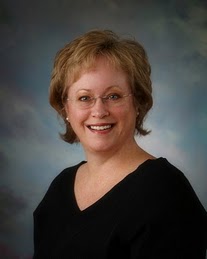

Missy Tippens is a pastor’s wife and mom of three. She has a story included in Blessings of Mossy Creek, published by BelleBooks. After ten years of pursuing her dream, she made her first sale of a full-length novel to Harlequin Love Inspired. Her books have been finalists in the ACFW Book of the Year, Bookseller’s Best, and Gayle Wilson Award of Excellence. A Family for Faith (April 2011) is her most recent release from Love Inspired. Coming next, A House Full of Hope (Feb. 2012).


Missy has presented workshops at RWA National and Moonlight & Magnolias conferences. She will be co-teaching a workshop for FF&P in June. You can find her at http://www.missytippens.com. And she blogs all over the place: http://www.lifewithmissy.blogspot.com, http://www.seekerville.blogspot.com, http://www.thefaithgirls.com. Be sure to look for her Missy Tippens Readers page on Facebook.


A Family for Faith


When Faith Hagin sees widower cop Gabe Reynolds every day in her coffee shop, she can't help but feel for the struggling single dad. She's raised a teenager of her own—and sadly, knows what not to do. But thanks to his matchmaking preteen daughter, Chelsea, the whole town's praying for Gabe to find a wife! Even though Faith thinks she's content being just friends, spending time with him and Chelsea starts to feel like a fresh start at having a family. And their love may be the answer to everyone's prayers.

Wednesday, March 30, 2011

Writing Dialect

Please welcome guest blogger Marsha A. Moore

In my recent fantasy romance release, Tears on a Tranquil Lake, I faced the problem of writing dialect. The story is a love triangle between a mermaid, a merman, and a pirate captain. Learning buccaneer speaking patterns was essential. Also, my favorite character, a Haitian vodoun mambo proved a real challenge.

Writing dialog for those unusual characters led me to study various ways to make them sound authentic. I’ll categorize the various techniques.

Grammar

The socio-economic status of a character is often reflected in their education, and therefore in their speech. “I don’t got no car so I ain’t going” creates a character who is poorly educated and probably in a lower income group.

Oppositely, in James Clavell’s Shogun, the ship’s captain, Blackthorne, speaks as an educated man. In this example, word choice and rhythm differentiate between him from lower-class English crewmen: “Pilot, it was terrible. No grub or liquor and those God-cursed paper houses’re like living in a field—a man can’t take a piss or pick his nose, nothing without someone watching, eh?” His personality and well-to-do manner clearly come through the dialect.

Regional or Foreign Speech Patterns

Watch for patterns in sentence structure, especially for characters from another country. Do they use the wrong tense or the wrong pronoun? Does the adjective go after the noun instead of before? Lack of contractions also makes a character sound foreign.

In Amy Tan’s The Joy Luck Club, a Chinese-born mother says, “This American rules . . . Every time people come out from foreign country, must know rules. You not know, judge say, Too bad, go back. They not telling you why so you can use their way go forward They say, Don’t know why, you find out yourself.” This dialog, with numerous deviations from proper English, gives the reader a perfect image of what the character sounds like, and also conveys her attitude as well.

Another great example of foreign dialect can be found in Louise May Alcott’s Professor Bhaer in Little Women. The authors used word choices and pronouns for his German-sounding English. When the professor gives Jo a book of Shakespeare, he says, "You say often you wish a library. Here I gif you one, for between these lids (covers) is many books in one. Read him well, and he will help you much..." The German accent rings in your mind as you read.

Even regions within a country will show different word choices and phrasing. Some people refer to a front porch, while others call it a stoop. Does “call” mean to telephone or to stop by? The familiar debate between the words “soda” and “pop” is tied to specific regions of the US.

Slang

Slang can do a great job of distinguishing character voice, especially if the story is set in the past. But using modern slang can quickly date your work, making it seem out-of-sync with the times. However, slang can effectively be made up for fantasy characters or children, giving them unique voices.

Phonetic Dialect


This technique was once more acceptable in literature. Consider this example from Mark Twain’s Adventures of Huckleberry Finn: “You wants to keep 'way fum de water as much as you kin, en don't run no resk, 'kase it's down in de bills dat you's gwyne to git hung.” This method of creating dialect must be used cautiously, because it complicates and slows down the story. Too much will turn the reader away completely.

In the case of my vodoun mambo, Teega, I manipulated slang and grammar, but still came up far shorter than the voice in my mind. I wanted speech like the character Tia Dalma from Pirates of the Caribbean. I actually studied YouTube clips, listening over and over, in order to phonetically write a few words key of her speech. It always makes me smile when a reader tells me Teega’s voice reminds them of the movie character. Recently, I wrote the sequel to Tears on a Tranquil Lake, with Teega as a major player. To do so, I spent even more time studying to carefully craft her dialog.


Here’s a sample of Teega’s dialog from Tears on a Tranquil Lake. “Relax, my child, Teega es here. I heard yer heart crying from over a mile yonder. Ye be the saddest soul on tis island tonight. I have come te help ye.”

If overdone, dialect can create a mire, but too little sanitizes the prose. It is a delicate balance to consider word-by-word.

And, I am more than a little anxious for On Stranger Tides to be in theaters May 20th!


Marsha A. Moore: My writing is classic romanticism, soft erotica, and a sparkle of magic ~ adult fairy tales. I am a writer of fantasy erotica. Last summer I moved from Toledo to Tampa and am happily transforming into a Floridian. Every day I can spend at the beach is magical. My first book, Tears on a Tranquil Lake, is contracted for release February 1st, 2011 from Muse Publishing.

Creativity is the elixir of my life. I'm happiest creating . . . writing, painting, drawing, knitting, cooking. Imaginative expression extends a portion of me out to the world. I love writing, all forms – novels, short stories, poems, and non-fiction. Twisting real life experiences into fictional adventures intrigues me. Poetry flows when emotions overwhelm my ability to sequence plot or paragraph. As a music reviewer, I've promoted rock/metal bands and their music while working for several record labels. Other artistic activities like watercolor painting and pen-and-ink drawing relax me. I'm currently working on some illustrations for my upcoming book, Tears on a Tranquil Lake.
Website
Blog
Twitter
Facebook
Goodreads


Tears on a Tranquil Lake

What a surprise for a young woman, to find herself suddenly transformed into a mermaid.

Ciel’s first thought – track down the merman who changed her and make him reverse his magic.
Unable to find him, survival in her new world becomes paramount. She eagerly accepts help from a dashing pirate captain who takes a fancy to her, lavishing her with finery. When her merman does show up, he competes for her affection. One look into his eyes makes her life more complex -- he is her soul mate.

Which man will she choose – pirate captain or merman? Which life – human or mermaid? Caribbean adventures and dangers chase Ciel as she searches for decisions and the key to her happiness.

Warning: This book contains Haitian vodou, sultry wenches, foul-mouthed scalliwag pirates, overindulgence of fine Caribbean rum, and amorous encounters on deserted beaches.

Tuesday, March 29, 2011

Scifi/fantasy with romantic elements vs. romance with scifi/fantasy elements

Please welcome guest blogger Kelly McCrady


Be certain which your publisher is after before you submit, or be prepared for a rejection worded something like this:


Dear [author],


Thank you for submitting your manuscript [title]. While it is well-written, gripping scifi/fantasy/paranormal awesomeness, we cannot offer you a contract for the manuscript in its current form. What you have written is a scifi/fantasy book with a love story in it; your hero and heroine marry on page 160, and work together as a team for 220 more pages of external conflict leading up to the birth of their child.


Here at [publisher] we only accept romance, which means the romantic conflict holding the hero and heroine back from their HEA must span the entire word count of the book. External forces holding the lovers physically apart from each other is not the same as internal, emotional conflict delaying the dénouement desired by our readers.


We wish you luck in placing this otherwise really good story with an appropriate publishing house.


Sincerely,


[Editor who wasted her weekend reading a story she cannot buy or get paid for.]


Sadly, not every synopsis (oh, how we hate to write those! Editors know this) shows this distinction clearly. You, the author, may be the only person who knows the percentage of your manuscript dedicated to the real-time advancement of the romantic relationship between your hero and heroine. While you’re studying submission guidelines (you do, right?), ask yourself: Is it enough for the publisher you’ve targeted?


One way to decide this is to use simple math. It will take careful reading but try this trick: Take a piece of paper or a 3x5 card and draw a line down the center to divide it in half. On one side, write “yes” at the top and on the other side write “no.”


Read your manuscript scene by scene. A scene is defined as characters, place, and time—when one element changes, you have a new scene. At the end of each scene, ask yourself this question: Does this scene address the development of the romantic relationship between my hero and heroine (or hero and hero, depending on your subgenre)? Yes or no. Make a hash-mark on the correct side. And once both the hero and heroine have accepted their love for the other and they are in agreement on this, with no more arguments tearing them apart—you have reached the “end” of the romance portion. No more “yeses.”


By the time you reach the end of the manuscript, you will be able to see which side is “heavier.” What does this mean toward submission guidelines?


Count the number of hash-marks on the “yes” side. Add up all on the “no” side and add that to the “yes” number for the total scenes. Divide the “yes” number by the total for a percentage. For example, at my publisher, The Wild Rose Press, you should have a minimum of 80% of the manuscript dedicated to the development of the romance.


The next time you’re unsure whether your book is romance genre or scifi/fantasy genre, count your scenes—the answer may be more obvious than you fear.


-----


As a sci-fi/fantasy fan and author, Kelly believes the best stories contain the human element of romance. Scribbling pieces of stories into spiral notebooks since first grade, she became serious about the craft of writing in 2001. Her dream is to see her work on the library shelf next to Anne McCaffrey's. In her free time, this former zookeeper crochets, knits, quilts and gardens – badly. "I'm better with words than with plants," she says. Kelly lives in Oregon with her husband and daughter. Visit her on the web at http://www.kellymccrady.com/


The Empire’s Edge


LEAH INDASELY, daughter of the First House, expects to wed to an old friend of equal rank. Instead, the king makes her a decoy to find an insurgent out to stage a coup, and arranges Leah’s cover—marriage to an aloof army captain. Leah plans to return home when her assignment is finished, the marriage annulled.


Driven by desire to earn status, not have it handed to him, JEREN VASSAL reluctantly joins his high-born bride at the altar, knowing marriage is necessary to his new commission. Yet Leah, full of grace and intelligence, sparks thoughts of home and family, a life beyond that of a soldier.


Now an old enemy threatens to rise again. Questions of loyalty force Leah and Jeren to unite, to find a solution to the disappearance of the realm’s dragons, and pacify a vengeful neighboring culture. First they must find the source of unrest inside their kingdom, and despite offering their honor on false pretense, they begin an unexpected slide toward love.

Monday, March 28, 2011

Organizing Your World

Please welcome guest blogger Michele Hauf


This is not about world-building, but rather, how to keep your big ole universe nicely contained and in order so when you need to remember if your vampires can go out in sunlight, or if your werewolves can have sex while shifted to wolf/man form, you know exactly where to find that info.


As paranormal/fantasy writers we create elaborate worlds. The world building is intricate and unlike any other 'world' out there (we hope). Often we feature secondary characters from a previous book in a new story, or have recurring characters, familiar locales, or even specific jobs related to the world. Recently, as I was writing book # eleventy-something-or-other in my world, I wanted to feature a character from book #2 or 3 and actually had to dig out that book and reread parts of it to familiarize myself with the character. It was high time to start a World Bible.


So I'm going to tell you what I do, and then I'd love it if everyone would share how they organize their worlds. We can learn from each other and pick up new ideas!


First, the cool thing about this project is you get to go shopping at the office supply store. Who doesn't drool over office supplies? I bought the fattest ring binder I could find, with room to insert pages on the fronts and backs. I put a picture of my world logo on the front to make it all official. (Seriously, it's too cool.) Inside, I went crazy with the dividers and created various sections such as:


CREATURES: This section has one page for each creature in my world, listing their attributes. As I add new creatures I can add new pages, and as I learn or change attributes I make updates. Of course, I start with a Word file and then print out each creature on a separate page. You can buy pre-punched paper for ring binders, so just print it up and you're ready to go!


TERMS: We all have terms specific to our worlds. But can you remember what you called the vampire's blood hunger ten books ago? Keeping a term list is essential. Print it up and put it in your binder for easy reference.


MAPS: I have a map of Paris and Minnesota because those are the main settings in my stories. I mark where characters live and if I have a nightclub in a specific location.


PACK/TRIBES: My werewolves run in packs and the vampires form tribes. It's helpful to me to have a list of each because there are many. You can do this for groups, clans, klatches, covens, etc.


QUOTES: Sometimes a character will say something that really defines him/her. I'll copy that quote in this section should I use him in a future story and want quick entry into his thoughts.


NOTES: This section can be for notes on your world, significant organizations or groups and events. I actually have to keep track of all the nightclubs because I am a addicted to using nightclubs in my stories.


OTHER: Here I list other characters that were never big enough to garner a secondary character status, but who knows, I might want to use them at some time. I also keep a list of books by title, and what characters are in each book.


You can have as many sections as you like. Have fun with it!


The biggest section is an alphabetical list of characters. Under each letter I have a page for each character. And on each character page I list these details: Full name, Born/Age, Location, Profession/Breed, Partner, Married, Children, Friends/Family, Hair, Eyes, Distinctive Marks, Looks like (because I use pics, sometimes of movie stars, when writing), Traits, Book (pubbed book they appear in), Other Books (if they showed up in other stories), and finally Notes, where I list all the important details I think I might want to know about the character. I also put a picture on the page.


The character section is so valuable. I use it almost daily. Sometimes updating as I learn new things about characters, but a lot of times, just checking for the facts that have slipped my mind.


That is my World Bible. I cherish it because it's filled with all the people I've created. It's a tool that is important to me. If you want to see a streamlined version of my Character sheets and term list, I've created a 'nightclub' online where readers can go to learn more. I don't list all the details, but after all my hard work of putting together the bible I thought it would be great to be able to share it with others. And what perfect opportunity for readers to learn if one of their beloved characters shows up in another book. Find it at: clubscarlet.michelehauf.com


Now you tell me what information you put in your World Bible. I can't wait to share info!


Michele has been writing romance, action-adventure and fantasy stories for over nineteen years. Her first published novel was DARK RAPTURE.

France, musketeers, vampires and faeries populate her stories. And if she followed the adage 'write what you know', all her stories would have snow in them. Fortunately, she steps beyond her comfort zone and writes about countries she has never visited and of creatures she has never seen.

Michele blogs all over the internet. Check her Blog page to track her.

Michele can also be found on FaceBook and Twitter.


Seducing the Vampire

He was mesmerizing, a vampire like none other...but the fire between Viviane LaMourette and Rhys Hawkes would begin a centuries-long clash between two powerful vampire brothers.

In Marie Antoinette's Paris, the beautiful vampire Viviane seeks a male patron who will allow her to live on her own terms. Courted by two feuding brothers, Viviane succumbs to the handsome rebel, Rhys. She's unaware that Rhys has other, darker, motives. He seeks vengeance against his brother, Constantine—by stealing Viviane and tainting her with his blood.


But just as Rhys is realizing the depth of his love for Viviane, his brother takes his revenge.


Two centuries later, Rhys hears the urban legend of the Vampire Snow White, imprisoned deep in the tunnels under Paris. He must find her and set her free, but will he be able to save her from the evil still intent on destroying them?

Wednesday, March 23, 2011

Fleshing Out Flat Characters

Please welcome guest blogger Michelle Picard

Despite all our good intentions, there are times when we find ourselves pages into our manuscripts and are not feeling the love for one of our characters. Perhaps even an important character. Our hero? Our heroine? He or she comes off as flat, the back story we’ve undoubtedly memorized for her not only failing to make her three dimensional, but making us wonder who in the world would care about her if we can even slug through the rest of the manuscript.

This is when I return to my four square formula. You remember the game four square from childhood? My formula is summarized with four P’s:

-Parents
-Passions
-Pushed buttons
-Places she’s stuck
  1. Parents. What was the nature of my character’s relationship with his or her parents? Mother or Father specifically? Contentious? Cold? Loving? Imbalanced? Did the child act as the parent? Long to escape his or her household the first moment possible? If I understand early upbringing and early influences, I clearly envision what has brought her to the point in her life where the story begins.
  2. Passions. Does this character have a passion? Her vocation? Avocation? What sparks emotion for her? Art? Music? A particular injustice? I’m not talking sexual passion here, but the place in her soul she awakens despite other parts of her personality. I like my characters better when I know what else makes their hearts beat faster despite their love interest.
  3. Pushed Buttons. What ticks her off? What buttons can the other characters in the story push to show us the unattractive side to her? Although they may also show her strengths. These are not simply pet peeves like the toothpaste cap left on the counter. These are the words or attitudes that send the character over the edge. When someone tells her not to worry and she feels dismissed? When she’s preparing for trip and others in her life don’t keep to her schedule? When she’s ignored in a crowd? If you know what pushes her buttons you have to know why and that means you’ve gotten to understand her better.
  4. Places she’s stuck. This is a short cut for referring to the character’s beliefs about herself or her world that are wrong, got twisted somewhere along the path of her life. Those beliefs whose demise will allow her to grow. Identifying these beliefs is no easy task. And if you can find them, you’ve captured the core of your character and the best place to work her internal conflict.

My four square is clearly biased toward understanding internal conflict, although I find the external conflict of the plot flows easier when I have my mind wrapped around the internal. And the better I know my character, the more my mind is free to consider new surprising twists to the story. And this works even if I’m as far as half way through my manuscript. If I’ve reread my pages and despair over my characters, I pick up a notebook, go take a walk, and drag out my list of P’s. Most of the time, I get back on track and fall in love again with the story. Which is the best feeling ever.

If you had to pick the handful of things you MUST know about your characters, what would they be?

If you want to take a peak at how my characters have turned out, visit me at www.MichellePicard.com.


Ever since she was a young girl and her fifth grade teacher read the class Peter S. Beagle’s novel THE LAST UNICORN, Michelle has been fascinated with all things magical, mysterious and otherworldly. She wrote her first tragic fantasy novella in middle school, recruiting art-minded friends to draw pictures of the fantastical universes she created.

Taking the road frequently traveled (not quite as romantic as the less traveled variety), and getting a BA in political science and a Masters in social work, she settled in New England. Along the way she collected a husband, two sons and two cats.

Finally, Michelle grabbed the proverbial bull by its spiky protrusions and pursued her passion. She now writes fantasy and urban fantasy, and admits to a fascination with gateways and portals, which seem to crop up in any story she writes.

Michelle is hard at work continuing her Eden’s Court series, and hopes you join her following Rachel and Gabriel’s adventures.

Please visit her at her website at www.michellepicard.com, her blog at www.michellepicardsblog.wordpress.com and at her group blog at www.thequirkyladies.com.
She’s on Facebook at http://www.facebook.com/people/Michelle-Picard/100000107670126 and on Twitter @RulingEden


Surviving Eden

Rachel Rieh wields enough magic to make a goddess jealous, or so she learned three weeks ago when she thought she was an ordinary, reclusive, and short-tempered gal from Boston. In this second story of Eden’s Court, Rachel, now the new ruler of the Kesayim, (angels, demons, dragons, faeries, vampires, shapeshifters and witches¾the goddess-created protectors of mortalkind) finds herself faced with the task of stopping vampire hunters from annihilating the vampire race. Her lover, Gabriel, half-angel, half-demon, stands by her side to help if she can escape her obsession with protecting him at all cost.


Earth is already on the verge of destruction within six months because magic is out of balance. The new threat to the vampires destabilizes the situation more. In her race to save the vampires, Rachel meets Lillith, goddess, creator of all Kesayim and humans, and the one with all the answers to Rachel’s problems. But is the cold-hearted goddess intent on changing Rachel into her image the greater threat to Rachel and everyone she loves?